
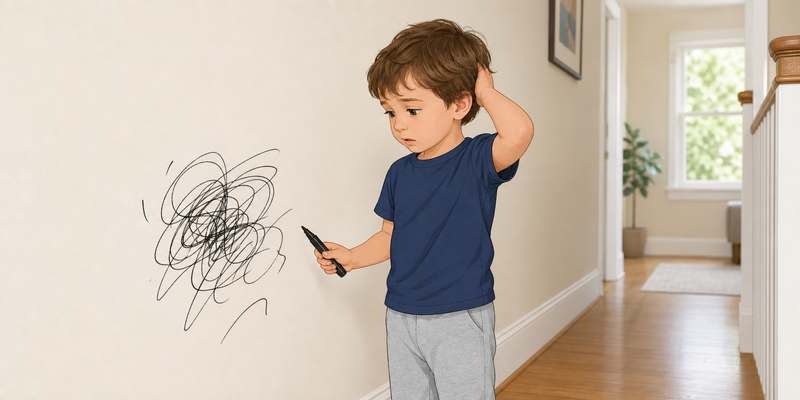
The mural appeared while I was on a phone call. My friend’s four-year-old had found a black Sharpie and decided the hallway wall needed art.
By the time we noticed, there was a proud, looping scribble at knee height. Her first instinct was to grab the roughest sponge in the kitchen and scrub. I stopped her, because that’s exactly how a small marker line becomes a big shiny bald patch in the paint.
Learning how to get permanent marker off walls without damaging paint isn’t really about the marker. It’s about your paint. The same method that wipes clean off a semi-gloss kitchen wall can dull and burnish a flat matte one into a mark that’s more obvious than the original scribble.
So, before you touch it, take a breath. Figure out what finish you’re dealing with, test in a hidden spot, and start gentle. Do that and most walls come out fine. Here’s the whole approach, finish by finish.
Why Paint Finish Decides Everything
Here’s the thing nobody tells you up front: it’s not the marker that determines whether your wall survives, it’s the sheen of your paint. Finishes range from flat to glossy, and each one handles cleaning very differently.
Flat or Matte – the most fragile. There’s no sheen protecting it, so any rubbing burnishes a shiny spot that catches the light. Gentlest methods only, and even then, carefully.
Eggshell – a touch more durable than flat, but still delicate. Light hand required.
Satin – moderately washable. It tolerates gentle solvent dabbing better than the softer finishes.
Semi-gloss or Gloss – the toughest and most washable, which is exactly why builders use it in kids’ rooms, kitchens, and bathrooms. It handles most removal methods with a light touch.
Not sure which you have? Look at the wall from a sharp angle in good light. The more it shines back at you, the more durable and washable it is. A wall that stays dead flat no matter the angle is matte, and that’s the one to baby.
Test First, Always (The 2-Minute Insurance)
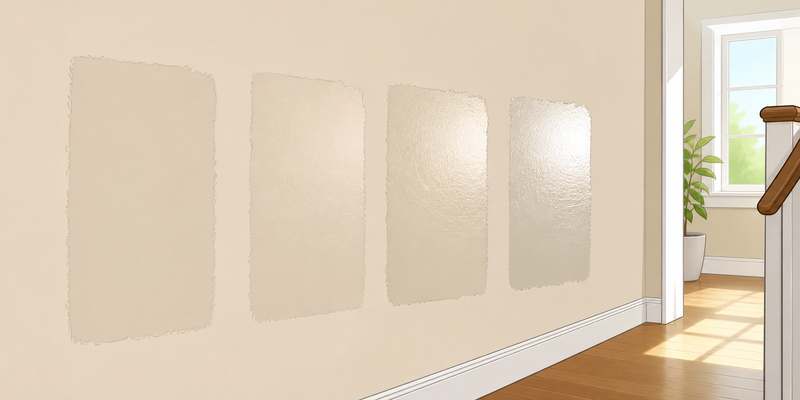
Whatever method you choose, test it somewhere hidden before you go near the visible stain. Behind a door, inside a closet, low on a wall behind furniture.
Apply your cleaner, wait two to five minutes, and check three things: is paint lifting onto the cloth, is color transferring, has the sheen changed?
If the hidden spot survives, you’re clear to treat the real one. And through every method below, remember two words: dab, don’t grind. Work from the outside of the mark inward, use white cloths only so no dye transfers, and stop the second the ink lifts.
Method 1: Rubbing Alcohol (Best All-Round, Most Finishes)
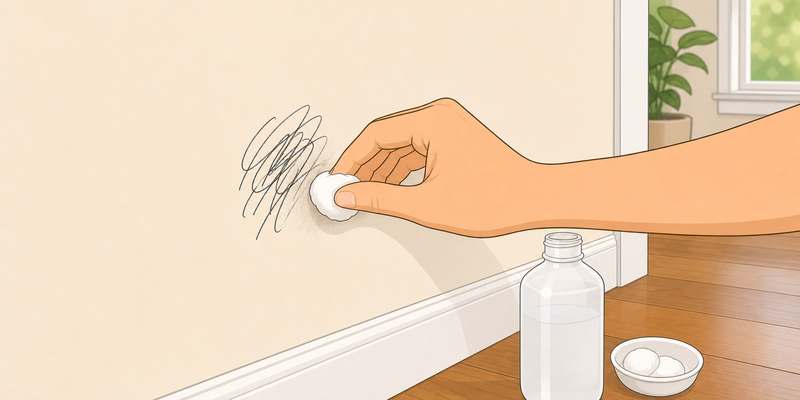
Rubbing alcohol is where I start on almost any wall. It breaks down marker ink well and stays gentle on paint as long as you dab rather than scrub. Here’s the sequence:
- Pour a little 70% isopropyl alcohol onto a cotton swab or cotton ball, not directly onto the wall.
- Press it onto the ink, hold for a second, then lift. Rotate to a clean section of the swab as ink transfers.
- Keep working from the outside of the mark inward so you don’t spread it.
- Wipe the area with a barely damp cloth to remove residue, then pat dry.
This is safe on satin, semi-gloss, and gloss. Use a very light touch on eggshell, and treat flat matte with real caution, testing hard first. If you’re wondering whether stronger tools are okay, my notes on whether a Magic Eraser is safe on Sharpie ink go deeper into that.
Method 2: Magic Eraser (Powerful, but Read This First)
A Magic Eraser feels like magic because it’s really fine abrasive. Melamine foam is essentially micro-sandpaper, and that’s both why it works and why it’s risky. On a painted wall, it doesn’t just lift the ink, it lightly sands the surface.
On semi-gloss or gloss with a light hand, that’s usually fine. On flat, matte, or eggshell, it removes the marker and burnishes the paint at the same time, leaving that tell-tale shinier clean spot that’s sometimes more visible than the scribble was.
If you go this route, use it barely damp, with the lightest pressure you can manage, on the smallest area, and stop the instant the ink is gone. The same tool behaves the same way on crayon on the wall, so the caution carries over.
Method 3: Gentle Household Options (Toothpaste, Baking Soda Paste)
If you’d rather avoid solvents and abrasive foam, a couple of mild household options sit nicely in the middle. Non-gel white toothpaste works as a gentle abrasive, and so does a paste of baking soda and a little water.
Dab either one on with a soft cloth, rub in gentle little circles, and wipe clean with a damp cloth. These are kinder to delicate finishes than a Magic Eraser, though they’re slower and weaker on older, set-in ink.
Expect to repeat a few times, and don’t be surprised if a stubborn stain needs you to fall back on the alcohol method.
What NOT to Use on Painted Walls
Some old advice out there will actively wreck your wall. Skip these entirely:
Acetone or nail polish remover. It strips paint, especially latex, faster than it removes ink. Plenty of outdated guides suggest it. Don’t use it on a painted wall.
Bleach. It discolors paint and the fumes aren’t worth it indoors.
Abrasive scrub pads or steel wool. These scratch every finish, glossy ones included.
Hot water plus hard scrubbing. Heat and friction together burnish matte paint into a shiny halo. Keep water cool and your hand light.
The Hardest Case: Removing Marker from Flat or Matte Walls
Flat and matte walls are the worst-case scenario, so they get their own section. They’re slightly porous, they have no protective sheen, and the ink soaks in a little. Worse, any friction at all shows up as a mark.
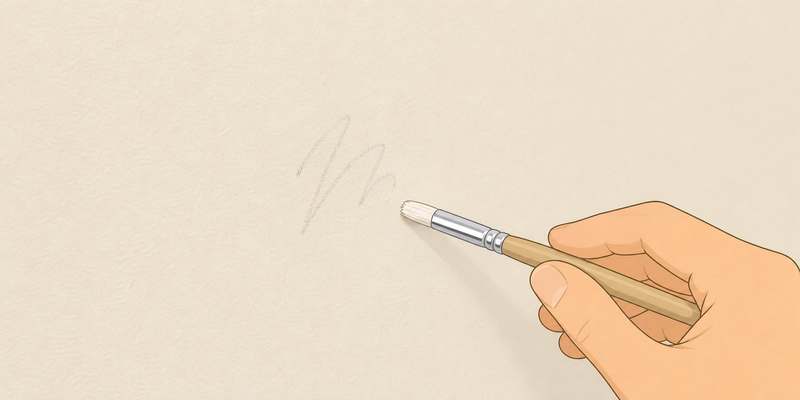
Your safest move is a light rubbing-alcohol dab and nothing more aggressive. Here’s the honest truth most guides won’t tell you, though: if a gentle dab doesn’t lift it, a small touch-up with matching flat paint is often the cleaner fix than scrubbing until you’ve created a shiny halo the size of your fist.
Especially for renters, dabbing a bit of matching paint over a stubborn spot is usually easier and cheaper than trying to explain a large cleaned patch at move-out. Know when to stop cleaning and start touching up.
Textured Walls and Wallpaper
Textured walls, the orange-peel or knockdown kind, trap ink down in the crevices where a flat wipe can’t reach. Use a cotton swab with a little alcohol and dab into the texture rather than flattening it with a cloth. Patience matters more than pressure here.
Wallpaper is its own question. If it’s a washable vinyl paper, a gentle alcohol test in a hidden corner usually tells you it can handle a light dab.
If it’s a delicate paper wallpaper, keep liquid to an absolute minimum, and accept that a badly stained panel may need replacing rather than cleaning. The same ink-removal logic applies to marker on hard surfaces like plastic trim near the wall.
What If the Paint Already Got Damaged?
Say you scrubbed before reading this, and now there’s a shiny spot, a dull patch, or a bit of lifted paint. It happens, and it’s fixable.
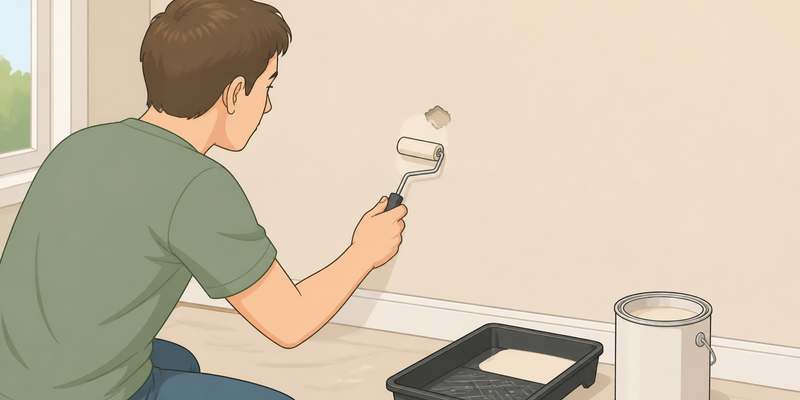
Let the area dry completely first. If any paint is raised or flaking, feather it smooth with fine sandpaper, going lightly. Spot-prime if bare wall shows through, then touch up with paint that matches both the color and the finish.
That last part matters: matching flat paint over a semi-gloss patch, or vice versa, will show. If you’re a renter, take a breath, a small feathered touch-up is a minor thing next to the panic you probably felt when the marker first appeared.
Common Questions About Getting Marker Off Walls
Does rubbing alcohol remove paint from walls?
Not if you dab gently on a durable finish like satin or semi-gloss. It can dull flat or matte paint, so always test a hidden spot before treating the visible stain.
Will a Magic Eraser take off wall paint?
It can. On matte or eggshell it tends to burnish a shiny clean spot because it’s a fine abrasive. It’s safer on semi-gloss and gloss with very light pressure.
How do you get permanent marker off a matte wall?
Use a light rubbing-alcohol dab and nothing harsher. If it resists, matching flat touch-up paint is usually cleaner than scrubbing a halo into the wall.
Can you remove Sharpie without damaging paint?
Yes on satin and semi-gloss finishes, using rubbing alcohol and a light touch. Flat and matte walls are the risky case where testing first really matters.
What removes marker from walls?
Rubbing alcohol first, then a Magic Eraser or baking-soda paste as backups, always matched to your paint finish. Avoid acetone, bleach, and abrasive pads.
Before You Start Scrubbing
The lesson from that hallway mural is simple: the wall is almost always saveable, but a panicked scrub is what ruins it. The damage comes from the wrong method, not the marker.
Match your method to your finish, test in a hidden spot, stay gentle, and stop the moment the ink lifts. Do that and your paint will very likely come through untouched.
And if you’re dealing with the other classic wall disaster, crayon on the wall instead, the same calm, finish-aware approach applies there too. Now go handle that scribble.